The Critical Role of Exercise in Mental Well-Being

Running
As a therapist, I spend a lot of time helping people understand their thoughts, emotions, and patterns. But one area that is often underestimated for improving mental health is exercise.
Physical activity is not only about physical fitness. It’s deeply connected to emotional regulation, resilience, confidence, and even how we process anxiety and stress. When we move our bodies, we are quite literally shifting our internal state.
Why Movement Works
From a clinical perspective, physical activity helps regulate the nervous system. It reduces cortisol (our stress hormone), increases endorphins, and can improve mood and focus. But beyond the biology, there’s something even more powerful happening: movement gives us a direct, experiential way to face discomfort and move through it. I can’t tell you how many of my clients have overcome huge transitions like divorce or loss of a loved one by engaging in more physical activity. It’s not the fix-all per se, but it helps redirect downward spirals of thoughts that are not conducive to healing.
This is especially important when it comes to anxiety.
Anxiety often tells us to step back, to stay safe, not to take risks. Physical activity, when approached encouragingly, teaches the opposite. It shows us that discomfort isn’t dangerous. That we can stay in it, breathe through it, and come out stronger on the other side.
What I See in My Own Home
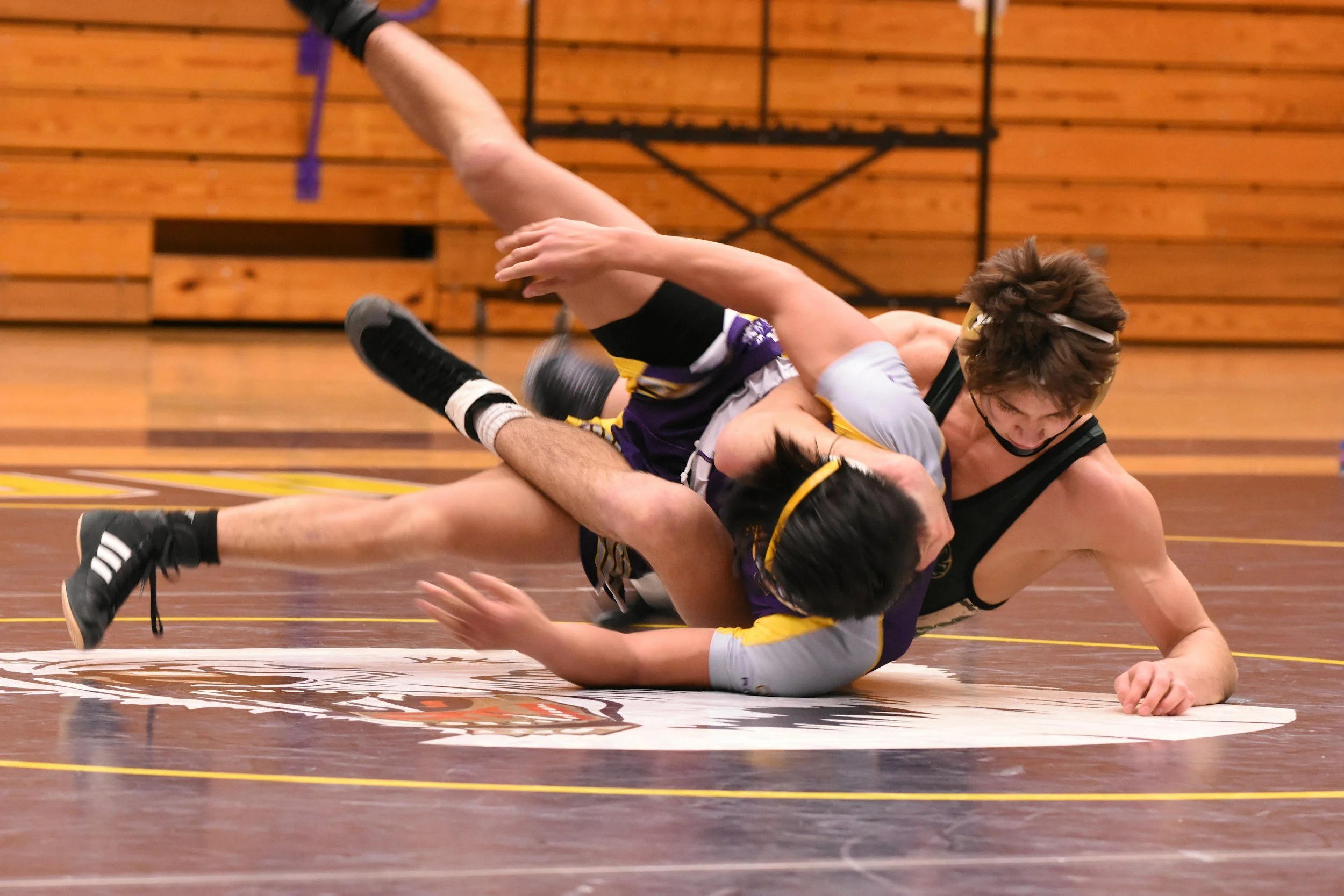
Wrestling
This is something I don’t just talk about with clients; I see it play out in my own family every day.
My boys are involved in wrestling and Muay Thai, and I’ve watched firsthand how these sports shape not just their bodies, but their minds.
Wrestling, in particular, is incredibly demanding. It’s one-on-one, there’s nowhere to hide, and it requires both physical endurance and mental toughness. Before matches, I used to see my son’s nerves and feelings of anxiety creeping in, but over time, he learned how to face that pressure head-on, channel it into focus, and step onto the mat with an increasing sense of confidence and control.
Muay Thai offers something similar, but in a different way. It emphasizes discipline, control, and respect. There’s a rhythm to it, breath, movement, timing that naturally regulates the body. It teaches them how to stay grounded even when their adrenaline is high.
Both boys have learned that anxiety doesn’t mean “stop.” It means “you’re doing something that matters.” Over time, they’ve built a relationship with that feeling. Instead of fearing it, they recognize it, move with it, and perform despite it.
Building Resilience Through Discomfort
What both of these activities have in common is this: they require showing up in the face of discomfort.
And that’s the exact skill so many people are missing when they struggle with anxiety.
We often try to eliminate anxiety, but the goal isn’t to get rid of it; it’s to change our relationship with it. Physical activity creates safe, structured opportunities to practice this. You feel your heart pound faster, your muscles burn, your breath shorten and you keep going. You learn that your body can handle it.
That lesson translates far beyond sports.
It shows up when you have a difficult conversation, try something new, or confront uncertainty. You’ve already practiced staying in hard moments.
It Doesn’t Have to Be Intense
Not everyone needs to wrestle or train in martial arts to experience these benefits. The key is consistency and intention. If intense exercise feels intimidating, start small. Gentle forms of movement, like stretching, taking a short walk around your block, or trying chair exercises, can be just as valuable. These options make it easier to begin and help anxious clients see that movement can be accessible and supportive, not overwhelming.
Walking, lifting weights, pilates, dancing, any form of movement can support mental health if you approach it as a way to connect with your body rather than punish it. It's also important to remember that motivation comes and goes, and everyone has days when movement feels harder or less appealing. Progress is not always linear. Starting small, taking breaks, or having off days is normal and nothing to criticize yourself about. Being kind to yourself through setbacks is part of the process and helps move toward a helpful, lasting habit.
Ask yourself:
Can I stay present in my body while I move?
Can I notice discomfort without immediately trying to escape it?
Can I build trust in myself through this process?
That’s where the real growth happens.
A Final Thought
As a therapist and as a parent, I’ve come to highly value physical activity not simply as a health habit, but as a life skill.
It teaches us how to face ourselves.
How to tolerate discomfort.
How to move through anxiety instead of being controlled by it.
And perhaps most importantly, it reminds us that we are capable of more than we think.
So today, I invite you to choose one small way to move your body. That could mean standing up to stretch, walking around the block, or just taking a few deep breaths and rolling your shoulders. Remember, any move ahead is progress, no matter how small. Be gentle with yourself and celebrate the effort, not perfection.